African Mythology

Daily chitchat.

Moderators: Moderators, Junior Moderators

Forum rules
This General Forum is for general discussions from daily chitchat to more serious discussions among Somalinet Forums members. Please do not use it as your Personal Message center (PM). If you want to contact a particular person or a group of people, please use the PM feature. If you want to contact the moderators, pls PM them. If you insist leaving a public message for the mods or other members, it will be deleted.
User avatar
Rabshoole
SomaliNet Super
SomaliNet Super
Posts: 10610
Joined: Fri Nov 30, 2001 7:00 pm
Location: Midwest

Re: African Mythology

Post by Rabshoole »

Image

Abatwa

Fairies/pixies

Nomads

Origins- Zulu (South Africa)

The Abatwa a race of very small tiny fairies ride on ants and live amongst them. They were born when the nature spirit Vash’Nok cried and his tears fell to the earth. The tears burst and formed into this diminutive little people.

The Abatwa are very shy seclusive and can only be seen by children, pregant women and magic prationers.

The Abatwa are highly skilled hunters and warriors, they wield poisionous darts and arrows to protect themselves because of their size and if you were to step on one it could be a possible death sentence for you.
Image

Bisimbi Bi Masa

Water Nymphs

Habitat - Forests near lakes, rivers and pounds.

Origins - Congo

Beautiful creatures that live in natural water places, they are know for causing skin disease that only they can cure with their haunting cries. They are so dangerous that only skilled herbalist risk entering places where they are known to be.
Thanks Sophi, feel free to contribute at anytime :up:
User avatar
Rabshoole
SomaliNet Super
SomaliNet Super
Posts: 10610
Joined: Fri Nov 30, 2001 7:00 pm
Location: Midwest

Re: African Mythology

Post by Rabshoole »

Image

Jengu (Meingu is the plural)

Mermaid/Water spirit/Deity

Rivers, Seas, Ocean, Lakes

Origins - Sawa, Duala, Bakeweri (Cameroon)

Very similar to Mami Wata figure although the belief of meingu may predate Mami Wata traditions.

They are often depicted as very beautiful people with large eyes, wooly/kinky hair and gap toothed smiles. Although appearances of meingu can often differ from person to person. A jengu can often look more human or more fish-like

The meingu live in rivers and seas and are said to bring good fortune to those who worship the,. They can cute diseases and act as medim between the the worshipers and the spirit world
User avatar
Rabshoole
SomaliNet Super
SomaliNet Super
Posts: 10610
Joined: Fri Nov 30, 2001 7:00 pm
Location: Midwest

Re: African Mythology

Post by Rabshoole »

Image

Dragon/Serpent

Before the Earth was formed the genderless Creator God, named Nana-Buluku by the Fon people of Dahomey, created a companion dragon called Aido Hwedo who was both male and female.It was a dragon able to move with ease between Heaven and Earth who carried the Creator in its mouth. They travelled together into the physical realms to create the world as we know it. Each night when Aido Hwedo and the Creator rested, the dragon’s dung piled high making mountains filled with hidden treasure, nourishing the Earth so plants and great trees could grow. As the dragon writhed back and forth across the face of the Earth, it carved twisting valleys and coursing waterways. With the Creator’s direction (ie. the Word) and the dragon’s actions, the Earth was formed through hard work and spirit, the very essence of co-operation and co-creation.

When the work was finished the world was bountiful, but heavily laden with trees and large animals, mountains and villages. The Creator feared the Earth would collapse under its own weight. Aido Hwedo offered to support the world by coiling under it in a circular fashion its tail in its great mouth. The Creator knew Aido Hwedo detested the heat and created a great cosmic ocean for it to sleep in. Red monkeys who lived in the sea were directed to attend to Aido Hwedo’s needs by feeding the dragon iron bars whenever hunger came. In this myth it was important for the monkeys to keep the dragon eternally fed, otherwise it would start to eat its own tail and the world would surely be destroyed.

Like the red monkey’s with the iron bars, we must remember our responsibility to nourish the link which bridges our transcendent and physical natures. When spirit and action meet our world can begin to heal and sustain itself.
User avatar
Rabshoole
SomaliNet Super
SomaliNet Super
Posts: 10610
Joined: Fri Nov 30, 2001 7:00 pm
Location: Midwest

Re: African Mythology

Post by Rabshoole »

Image

Yewa (also known as Ewa)

The orisha associated with death and the final resting place of the underworld and watches over and protects people’s graves and is the guide the dead to the afterlife. As guardian of the underworld she aslo works alongside Oya. Yewa’s colours are burgundy and pink, she often depicted eliding a horsetail whip and a sword.
User avatar
Rabshoole
SomaliNet Super
SomaliNet Super
Posts: 10610
Joined: Fri Nov 30, 2001 7:00 pm
Location: Midwest

Re: African Mythology

Post by Rabshoole »

Image

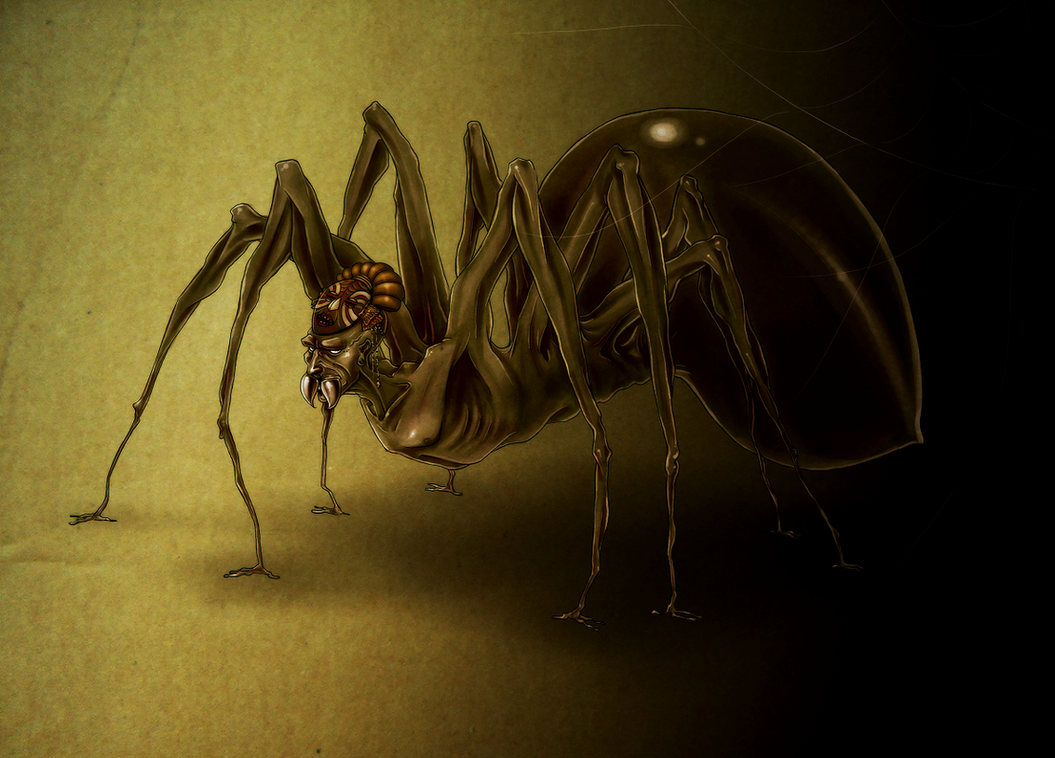
Yehwe Zogbanu

Origins- Dahomey Fon (Benin)

Deadly

A giant troll covered with 30 horns on his head and body and a deadly threat to hunters or anyone as it is extremely territorial and will kill and eat anyone trespassing.
User avatar
Rabshoole
SomaliNet Super
SomaliNet Super
Posts: 10610
Joined: Fri Nov 30, 2001 7:00 pm
Location: Midwest

Re: African Mythology

Post by Rabshoole »

Image

Nyarvirazi the Were-lioness

Origins- Rwanda (South East African maybe)

Nyarvirazi was a chieftain daughter or a the last born princess of a King. One day when venturing out into the wilderness she got lost as day turned to night she became tired, hungry and thristy looking for a way back. She found cup of water sitting atop of a tree stump and drank from it.

The water turned out to be urine from a lion left there by a witch or jujuman for a ritual that was to be performed under the full moon. Nyarvirazi could noticed that her senses were enhanced and as she made her way back home she had a craving for goat once seeing some she chagred after them turning into a lion and ate them. After devouring the goat she turned back into a human and ran back home, this became a habit on every full moon it wasn’t long until her brother became suspicious and saw her transformation and told the family about it.

Nyarvirazi warned them all to keep her transformation a secrect especially from her husband. When she had a baby the midwives joked about the baby no having claws, her husband wanted to know what they were talking about after many months of suspicion and threatened everyone with a spear which he ended up using on Nyarvirazi and the midwives and also the baby. Nyarvirazi transformed into a lioness and bit off his arm she called for other lions to appear and they ate him.

Nyarvirazi took her baby and went off with the Lions to become their Queen and Goddess thus keeping her family’s home safe from lions, she occasionally returns to her father’s village.
User avatar
Rabshoole
SomaliNet Super
SomaliNet Super
Posts: 10610
Joined: Fri Nov 30, 2001 7:00 pm
Location: Midwest

Re: African Mythology

Post by Rabshoole »

Image

Shango (also known as Chango, Sango, or Xango)

King of the orisha pantheon, rules over thunder, fire, drumming, dancing and male virility. Shango is actually a deified king who was once the Fourth Alafin of the city-state of Oyó. He is one of the most worshipped orishas in the pantheon and his legends are numerous and speak to the human experience. He has four separate wives: Obba - his first wife who was faithful but unattractive so Shango withdrew his affections from her, Oshun his favourite lover, Oya his equal in strength and power, and Yewa the virgin daughter of Obatala whose purity was stolen by Shango. He is the the owner of the sacred drums, a powerful sorcerer who wields fire and lightning, and loves to seduce women, drink and dance. Shango has a special relationship with Babalu Aye as he was the only orisha to offer him assistance when he was sick and homeless. Shango is often considered the son of Yemaya and his fatherhood is either credited to Ogun or Aggayu. Shango was a very impulsive youth and was quick to anger, and legend has it that Obatala taught Shango the art of diplomacy and gifted him with the white bead that is now a part of his necklace. In nature, Shango is said to live at the top of the royal palm tree and his offerings are commonly placed at the foot of palm trees. Shango is petitioned for help with protection, enemies, sexual, business success, and good fortune.
User avatar
Rabshoole
SomaliNet Super
SomaliNet Super
Posts: 10610
Joined: Fri Nov 30, 2001 7:00 pm
Location: Midwest

Re: African Mythology

Post by Rabshoole »

Image

Orunmila (also known as Orula, Orunla, or Ifa)

The orisha of divination. He is the “eleripin” — the witness of destiny — who knows everything that awaits us as part of our fate. He has a very close working relationship with Eleggua and together they intercede on behalf of humanity to alter people’s destinies, ward off death and other misfortunes, and guide us to cultivate good character. His worship is primarily centred around the Ifá tradition, both in traditional African worship and in the African Diaspora in the new world, where his initiated priests, called awos, babalawos, iyanifas or oluwos, act as diviners for the greater community. He is petitioned for help with making wise descisons, opening roads, healing and protection from evil.
User avatar
Rabshoole
SomaliNet Super
SomaliNet Super
Posts: 10610
Joined: Fri Nov 30, 2001 7:00 pm
Location: Midwest

Re: African Mythology

Post by Rabshoole »

Image

Babalu Aye (also known as Omoluaye, Asojano, or Shopona)

Orisha who rules over infectious diseases and healing. He is one of the most feared and revered orishaw because of his power over life and death. Babalu Aye’s worship originated with the Fon tribe of Benin, in Western Africa, but his influence was so powerful that tribes up and down the West African coast adopted his worship. He is the patron of those suffering from many infectious diseases. Babalu Aye has a special relationship with the orisha Shango because he was the only one who reached out to assist him when he was sick and homeless. Babalu Aye is frequently called upon for help with healing and overcoming these plagues.
User avatar
Rabshoole
SomaliNet Super
SomaliNet Super
Posts: 10610
Joined: Fri Nov 30, 2001 7:00 pm
Location: Midwest

Re: African Mythology

Post by Rabshoole »

Image

Ochosi (also known as Ochossi, Oshosi, or Oxosi)

The divine hunter and embodiment of justice amongst the orishas. He is a skilled tracker and the most talented archer in the world. While he can find his way in and out of the jungle where others get lost, he does not live there. He is an urban orisha and lives in Obatala’s castle as his personal hunter. He is close friends with Eleggua and Ogun; the three of whom are called “the warriors”. He is an orisha of high moral and ethical standards and encourages his worshippers to be law-abiding, upstanding citizens. He helps his followers to “hit the mark” when they strive to attain goals, and to do so with integrity. He is frequently called upon for issues of injustice and for court cases and legal issues and is considered the patron of police officers and court officials by many followers.
User avatar
Rabshoole
SomaliNet Super
SomaliNet Super
Posts: 10610
Joined: Fri Nov 30, 2001 7:00 pm
Location: Midwest

Re: African Mythology

Post by Rabshoole »


Image

The Anansi stories originated from Ghana’s Ashanti tribe.

There is an Anansi story that explains the phenomenon of how his name became attached to the whole corpus of tales:

Once there were no stories in the world. The Sky-God, Nyame, had them all. Anansi went to Nyame and asked how much they would cost to buy.

Nyame set a high price: Anansi must bring back Onini the Python, Osebo the Leopard, the Mmoboro Hornets, and Mmoatia the dwarf.

Anansi set about capturing these. First he went to where Python lived and debated out loud whether Python was really longer than the palm branch or not as his wife Aso says. Python overheard and, when Anansi explained the debate, agreed to lie along the palm branch. Because he cannot easily make himself completely straight a true impression of his actual length is difficult to obtain, so Python agreed to be tied to the branch. When he was completely tied, Anansi took him to Nyame.

To catch the leopard, Anansi dug a deep hole in the ground. When the leopard fell in the hole Anansi offered to help him out with his webs. Once the leopard was out of the hole though he was bound in Anansi’s webs and was carried away.

To catch the hornets, Anansi filled a calabash with water and poured some over a banana leaf he held over his head and some over the nest, calling out that it was raining. He suggested the hornets get into the empty calabash, and when they obliged, he quickly sealed the opening.

To catch the dwarf he made a doll and covered it with sticky gum. He placed the doll under the odum tree where the dwarfs play and put some yam in a bowl in front of it. When the dwarf came and ate the yam she thanked the doll which of course did not reply. Annoyed at its bad manners she struck it, first with one hand then the other. The hands stuck and Anansi captured her.

Anansi handed his captives over to Nyame. Nyame rewarded him with the stories, which now become known as Anansi stories.


User avatar
Rabshoole
SomaliNet Super
SomaliNet Super
Posts: 10610
Joined: Fri Nov 30, 2001 7:00 pm
Location: Midwest

Re: African Mythology

Post by Rabshoole »

Image

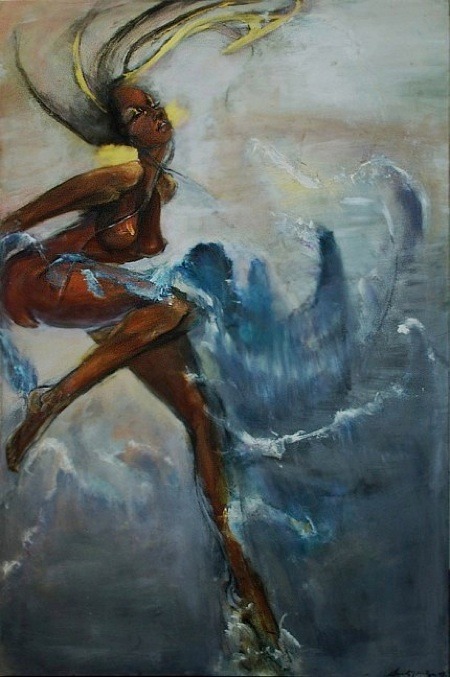
Yemoja (also known as Yemaya and Iemanja)

The queen of the Earth, owner of all waters, and the orish of motherhood. She is the mother of all living things and lives in the sea. Her name is a contraction of the Yoruba saying “iyá omó eyá” meaning “mother whose children are the fish.” and mer-people are Yemoja sacred offspring. She is the older sister of Oshun.

Yemoja wears seven panels skirts to represent the seven seas of which she rules over. She carries a black haired horse tail fly-whisk, a sabre, or a machete with which she defends her children. When she spins, the rippling edges of her dress are the tempestuous waves of the stormy sea.
Tuushi
SomaliNet Super
SomaliNet Super
Posts: 8716
Joined: Sun Apr 15, 2012 8:58 am

Re: African Mythology

Post by Tuushi »

Is there a book on this? I would love to read on it.

Thanks for sharing Armaan. :up:
User avatar
Rabshoole
SomaliNet Super
SomaliNet Super
Posts: 10610
Joined: Fri Nov 30, 2001 7:00 pm
Location: Midwest

Re: African Mythology

Post by Rabshoole »

^ I'm not really sure if their any but I'm certain most of these characters are incorporated into notable comic book characters, as I'm searching through I've found quite familiar characters such as Storm from the X-men character originated from a character known as Oya among other characters.
Image

Oya (also known as Yansa or Yansan)

a powerful female warrior orisha, one of Shango’s wives, owner of the marketplace, and owner of the cemetery and the ruler of winds. She, along with Orunmila, are the only two orishas who defeated Ikú, the force of death. She stole Shango’s secret of fire and now throws lightning bolts just like him. She raises the dead and commands them as her armies. She carries a machete and screams as she rides into battle on the tornado.

Image

Aziza

Fairies/Forest dwellers

Friendly

Origins- Dahomey

The Aziza are a beneficent fairy race from . Living in the forest, they provide good magic for hunters although they can be quite shy at time. They are also known to have given practical and spiritual knowledge to people (including knowledge of the use of fire). They are described as little hairy people and are said to live in anthills and silk-cotton trees
User avatar
zulaika
SomaliNet Super
SomaliNet Super
Posts: 9569
Joined: Wed Aug 06, 2003 7:00 pm
Location: more money...more problems solved!!

Re: African Mythology

Post by zulaika »

AgentOfChaos wrote:You forgot dhagdheer.
I was told of dhagdheer when I was a little girl, horta was it intended to be a story for children? When I tried to think of Somali children's stories or folktale suitable to children, all I could remember was dhagdheer... I could never tell my little girl about dhagdheer and frighten her as I was.
Post Reply
  • Similar Topics
    Replies
    Views
    Last post

Return to “General - General Discussions”