Disclosure: Just had genetic DNA done and I am "Mr. T" ,
itrah
Moderator: Moderators
-
Jabuutawi
- SomaliNet Heavyweight

- Posts: 2680
- Joined: Fri Apr 04, 2014 1:33 am
- Location: Federal Republic of Soomali-Galbeed Capital of Dira Dhabe
Re: itrah
I don't want to get into a thesis or lecture anyone about the the intricacies of SNP, latent mutation and founder-effect, but essentially Y-DNA is the "abtirsi" portion of your patrilineal branch. It is passed from father to son only. Hence if you are a E1b1b, you share common ancestry (father) with 75% to 80% of Somalis, Moroccans, etc.
Disclosure: Just had genetic DNA done and I am "Mr. T" ,
Re: itrah
Are you thick mise waxbo ma ogid?Gedo_Boy wrote:Khalaas that's all I was saying.
A common father is the base of all tribes, clans, nations, even race. Every nation says that.
Ydna tells you only your geoghraphic origin, if some one lives in europe and carries E, he has origins in africa but it doesn't proof his ethnicity
So how can you claim the berbers being related to you?
R the blue black housa related to the white people since they carry R1 at 90 percent?
To know who your relative ethnicities you need to find out your dna ethnicity
You may had an ancestor who was mixed like being 40 arab, 30 somali, 30 asian therefore your an arab!
Fahimtu? As somalis say lol
Re: itrah
Sahal80,
If you are wrong, at least stop aflagaadada. You say?
As Jabuutawi said, Y-DNA is the closest we have to "Abtirsi". It has absolutely nothing to do with geography!!!!!
Again, I repeat It has absolutely nothing to do with geography!!!
If somebody has R Y-DNA, it means they have a common father with anybody else who has R DNA. It means you share a common father many many generations ago but it doesn't tell you anything about ethnicity.
Do you understand????
Berbers are related to Somalis because they have the high levels of E1b1b in both groups.
If you have a common father with somebody, doesn't that mean you are related?
DNA can help you understand ethnic groups, but most of the time ethnic groups are decided by common culture, language, intermarriage etc. Ethnic groups and DNA are not exactly the same thing.
If you are wrong, at least stop aflagaadada. You say?
You just agreed with me that Y-DNA means you have a common father-son-father-son-father-son relationship. That is called abtirsi and nasab for your information.So how can you claim the berbers being related to you?
As Jabuutawi said, Y-DNA is the closest we have to "Abtirsi". It has absolutely nothing to do with geography!!!!!
Again, I repeat It has absolutely nothing to do with geography!!!
If somebody has R Y-DNA, it means they have a common father with anybody else who has R DNA. It means you share a common father many many generations ago but it doesn't tell you anything about ethnicity.
Do you understand????
Berbers are related to Somalis because they have the high levels of E1b1b in both groups.
If you have a common father with somebody, doesn't that mean you are related?
DNA can help you understand ethnic groups, but most of the time ethnic groups are decided by common culture, language, intermarriage etc. Ethnic groups and DNA are not exactly the same thing.

Re: itrah
A lot of times people with the same ethnicity have the same Y-DNA, but that is not always the case.
For example, Prophet Ismail married in the Arab Jurhum tribe from Yemen even though his father was Ibrahim who was not Arab.
Therefore, the Quraish's ethnic group is Arab, but maybe their DNA might say something else.
There is 3rab and Musta3rab and even though they are Arab ethnically, they may be genetically different.
Don't confuse language, ethnic group, Y-DNA etc.
For example, Prophet Ismail married in the Arab Jurhum tribe from Yemen even though his father was Ibrahim who was not Arab.
Therefore, the Quraish's ethnic group is Arab, but maybe their DNA might say something else.
There is 3rab and Musta3rab and even though they are Arab ethnically, they may be genetically different.
Don't confuse language, ethnic group, Y-DNA etc.
Re: itrah
Man why r you making yourself mufti in some thing you haven't read about it as you sound?
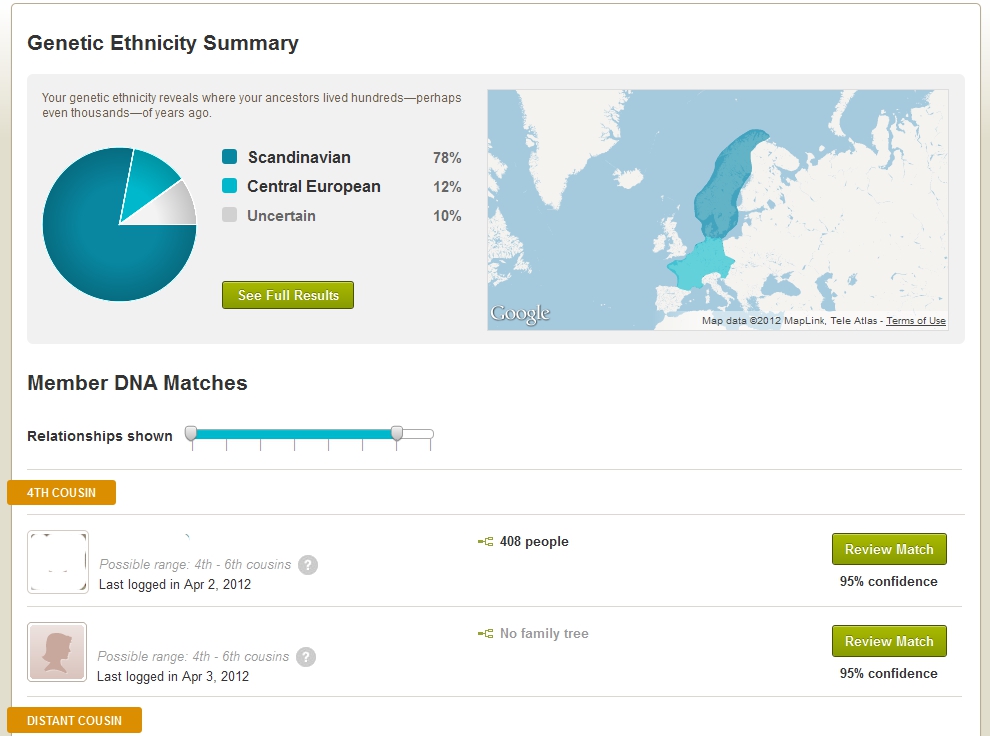
These r the results of some individuals, the first guy is british but his ethnicity is scandinavian though his origins are british!
There is no such thing as one y-line as you think, you got many lines/ancestors of different origins and this can be traced back through the autosomal testing
Having said that its about your blood from your both sides, the thing that difines your ethnicity but also shows your y-line different ancestors too
Before posting some thing you have no knowledge of it learn it first pleeeez!


These r the results of some individuals, the first guy is british but his ethnicity is scandinavian though his origins are british!
There is no such thing as one y-line as you think, you got many lines/ancestors of different origins and this can be traced back through the autosomal testing
Having said that its about your blood from your both sides, the thing that difines your ethnicity but also shows your y-line different ancestors too
Before posting some thing you have no knowledge of it learn it first pleeeez!


Re: itrah
Is this from ancestry.com?
What you are posting is nonsense brother. There is Y-DNA and there is mitochondrial DNA (mTDNA) which are paternal and maternal markers, respectively. Ofcourse there are other aspects of that but you seem to think ethnicity is something you can measure by a DNA test. Yes, in places of the world where there is a relatively homogenous population yes it corresponds pretty nicely, but in places where there is a lot of mix you can't determine that.
For example, you seem to think there's a British ethnic group.
In your picture, you speak about British or Scandinavian. British is not an ethnicity, it's a melting pot. Great Britain is an island that has been invaded and occupied by different people at different times:
You had the Romans who built Hadrian's Wall
http://en.wikipedia.org/wiki/Roman_conquest_of_Britain
You had the Norman conquests,
http://en.wikipedia.org/wiki/Norman_invasion_of_Ireland
You had the the Viking invasions:
http://www.englandsnortheast.co.uk/Viki ... mbria.html
A nation-state doesn't really correspond to ethnicity, like ethno-states do. For example, Japan is more of an ethno-state than Britain.
Please read this article:
http://www.prospectmagazine.co.uk/featu ... shancestry
Note: How does genetic tracking work?
The greatest advances in genetic tracing and measuring migrations over the past two decades have used samples from living populations to reconstruct the past. Such research goes back to the discovery of blood groups, but our Y-chromosomes and mitochondrial DNA are the most fruitful markers to study since they do not get mixed up at each generation. Study of mitochondrial DNA in the British goes back over a decade, and from 2000 to 2003 London-based researchers established a database of the geographically informative Y-chromosomes by systematic sampling throughout the British Isles. Most of these samples were collected from people living in small, long-established towns, whose grandparents had also lived there.
Two alternative methods of analysis are used. In the British Y-chromosome studies, the traditional approach of principal components analysis was used to compare similarities between whole sample populations. This method reduces complexity of genetic analysis by averaging the variation in frequencies of numerous genetic markers into a smaller number of parcels—the principal components—of decreasing statistical importance. The newer approach that I use, the phylogeographic method, follows individual genes rather than whole populations. The geographical distribution of individual gene lines is analysed with respect to their position on a gene tree, to reconstruct their origins, dates and routes of movement.
What you are posting is nonsense brother. There is Y-DNA and there is mitochondrial DNA (mTDNA) which are paternal and maternal markers, respectively. Ofcourse there are other aspects of that but you seem to think ethnicity is something you can measure by a DNA test. Yes, in places of the world where there is a relatively homogenous population yes it corresponds pretty nicely, but in places where there is a lot of mix you can't determine that.
For example, you seem to think there's a British ethnic group.
In your picture, you speak about British or Scandinavian. British is not an ethnicity, it's a melting pot. Great Britain is an island that has been invaded and occupied by different people at different times:
You had the Romans who built Hadrian's Wall
http://en.wikipedia.org/wiki/Roman_conquest_of_Britain
You had the Norman conquests,
http://en.wikipedia.org/wiki/Norman_invasion_of_Ireland
You had the the Viking invasions:
http://www.englandsnortheast.co.uk/Viki ... mbria.html
A nation-state doesn't really correspond to ethnicity, like ethno-states do. For example, Japan is more of an ethno-state than Britain.
Please read this article:
http://www.prospectmagazine.co.uk/featu ... shancestry
Note: How does genetic tracking work?
The greatest advances in genetic tracing and measuring migrations over the past two decades have used samples from living populations to reconstruct the past. Such research goes back to the discovery of blood groups, but our Y-chromosomes and mitochondrial DNA are the most fruitful markers to study since they do not get mixed up at each generation. Study of mitochondrial DNA in the British goes back over a decade, and from 2000 to 2003 London-based researchers established a database of the geographically informative Y-chromosomes by systematic sampling throughout the British Isles. Most of these samples were collected from people living in small, long-established towns, whose grandparents had also lived there.
Two alternative methods of analysis are used. In the British Y-chromosome studies, the traditional approach of principal components analysis was used to compare similarities between whole sample populations. This method reduces complexity of genetic analysis by averaging the variation in frequencies of numerous genetic markers into a smaller number of parcels—the principal components—of decreasing statistical importance. The newer approach that I use, the phylogeographic method, follows individual genes rather than whole populations. The geographical distribution of individual gene lines is analysed with respect to their position on a gene tree, to reconstruct their origins, dates and routes of movement.
-
- Similar Topics
- Replies
- Views
- Last post
-
- 47 Replies
- 4672 Views
-
Last post by SaciidAyanleh
-
- 2 Replies
- 827 Views
-
Last post by HayWire
-
- 3 Replies
- 900 Views
-
Last post by Thuganomics
-
- 1 Replies
- 678 Views
-
Last post by Itrah
-
- 8 Replies
- 1193 Views
-
Last post by SahanGalbeed
-
- 10 Replies
- 1385 Views
-
Last post by V32
-
- 5 Replies
- 919 Views
-
Last post by Hyperactive
-
- 28 Replies
- 3502 Views
-
Last post by Awil2222
-
- 31 Replies
- 3454 Views
-
Last post by Bilis
-
- 20 Replies
- 2304 Views
-
Last post by Xildiiid