Excerpt of the Periplus of the Erythraean Sea
Sailing along the coast beyond
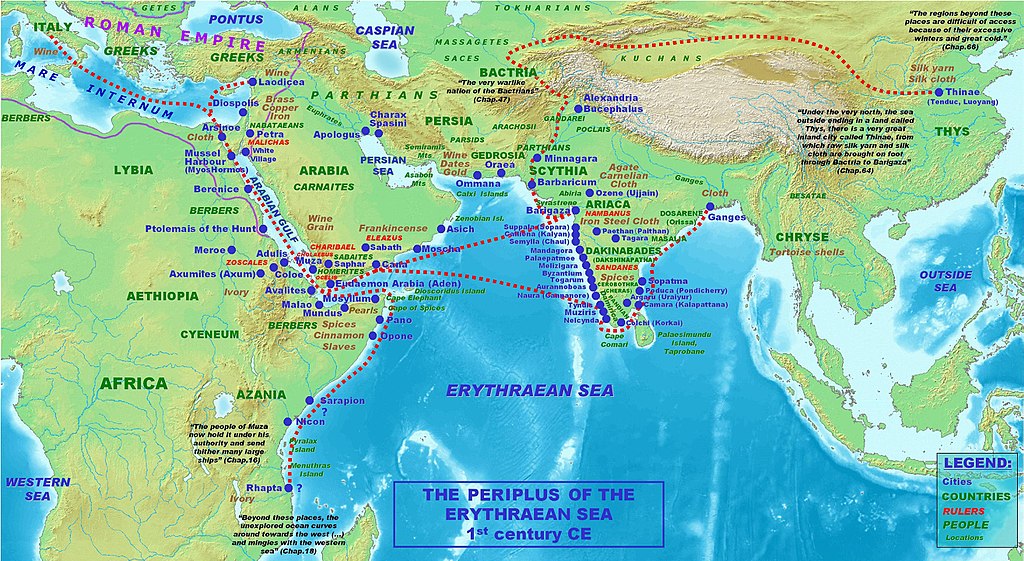
Mosyllum, after a two days' course you come to the so-called Little Nile River, and a fine spring, and a small laurel-grove, and Cape Elephant. Then the shore recedes into a bay, and has a river, called Elephant, and a large laurel-grove called Acanna; where alone is produced the far-side frankincense, in great quantity and of the best grade.
12. Beyond this place, the coast trending toward the south, there is the Market and
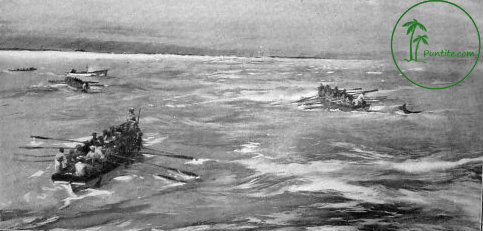
Cape of Spices, an abrupt promontory, at the very end of the Berber coast toward the east. The anchorage is dangerous at times from the ground-swell, because the place is exposed to the north. A sign of an approaching storm which is peculiar to the place, is that the deep water becomes more turbid and changes its color. When this happens they all run to a large promontory called Taba, which offers safe shelter. There are imported into this market-town the things already mentioned; and there are produced in it cinnamon, (and its different varieties, gizir, asypha, arebo, magla, and moto) and frankincense.
13. Beyond Taba, after four hundred stadia, there is the village of
Pano. And then, after sailing four hundred stadia along a promontory, toward which place the current also draws you, there is another market-town called
Opone, into which the same things are imported as those already mentioned, and in it the greatest quantity of cinnamon is produced, (the arebo and moto), and slaves of the better sort, which are brought to Egypt in increasing numbers; and a great quantity of tortoise-shell, better than that found elsewhere.
14. The voyage to all these far-side market-towns is made from Egypt about the month of July, that is Epiphi. And ships are also customarily fitted out from the places across this sea, from Ariaca and Barygaza, bringing to these far-side market-towns the products of their own places; wheat, rice, clarified butter, sesame oil, cotton cloth, (the monacheand the sagmatogene), and girdles, and honey from the reed called sacchari. Some make the voyage especially to these market-towns, and others exchange their cargoes while sailing along the coast. This country is not subject to a King, but each market-town is ruled by its separate chief.
"Ciidiisa udgoon baa aduunka ku caanee"