


Waaq
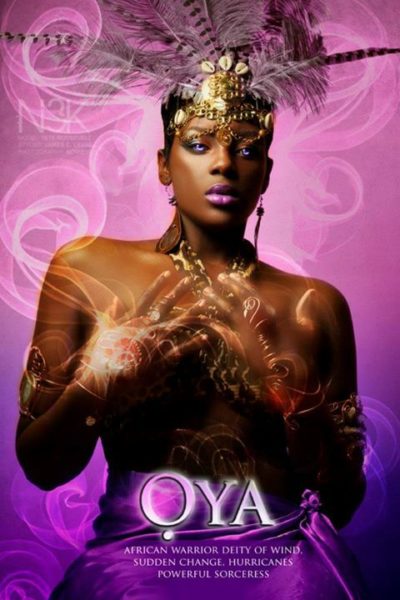


African mythology goes back since the dawn of time, Funny how we're taught more about the Greek Mythology, nothing is ever mentioned about the hundred African mythology characters. Feel free to add more.
Moderators: Moderators, Junior Moderators





jalaaludin5 wrote:fock do i want to know about mythology let alone mythical niggers.


 hot. If only he could discipline me.
The Asasabonsam or asanbosam [also Sasabonsam] is an African vampire from Ghana lore. They can take the shape of a man, woman or child. They are described as having hooks instead of feet which are used like traps. For example, the asasabonsam hangs in a tree and when a animal or human passes it grabs the victim with its sharp hook feet and eats it alive with its iron teeth. When attacking humans, it aims for a very unusual place, the thumb.
My interpretation of the Tokoloshe, one of South Africa’s most feared but secretly loved mythical imps. Known to creep up to people in their beds and carrying them away, many South-Africans raise their beds onto bricks to this day to prevent this from happening.
Anastasia, holy Anastasia,
You who were borne by Yemenja, our mother,
Give us the strength to struggle each day
So we may never become slaves,
So that, like you, we may be rebellious creatures
May it be so. Amen
The above is an image of Brazilian folk saint Escrava Anastacia (Anastacia the Slave), the daughter of an African princess in colonial Brazil who was reputed to work miracles and be a model of virtue in her own lifetime. Renowned for her beauty and her beautiful blue eyes, she is said to have often exclaimed, “eu não sou escrava” (I am not a slave). The popular image is of her muzzled with an iron mask which many believe was a punishment for the refusal of her master’s sexual advances. She more than likely died of gangrene from wearing that mask, and is said to have forgiven her oppressors before her death.
This was a winged horse from Ethiopia documented by the ancient Greeks. It had the wings of a bird on a horse that had one great horn protruding from its head. It was born from an island in the Red Sea off the coasts of Ethiopia.
Impundulu (also known as Thekwane, Izulu, inyoni yezulu)
Origins- Pondo, Xhosa, Zulu (South Africa)
Vampiric, Seductive
Deadly
The impundulu which tranlates into lighting bird is a black and white bird that is roughly the size of a human. It summons lighting from it’s wings and talon, and is said to be a servant or a familur to a witch or witch doctor and attacks it’s enemies by through killing them by striking the victim with lighting or turning into a beautiful human, seducing them and eventually satisfying its insatiable appetite for blood.
The fat of the bird is believed to be of great importance either as the feul that the bird sets on fire when it throws down a lighting bolt or as a component in traditional medicine. The fat is procured bycatching the bird a the moment when the lighting stikes the ground or by diggin the bird up from an underground cavity at the spot. The bird is futhermore belived to lay a large sapphire coloured egg underground at the location of where it’s strikes lighting three times.
This may be a good or bad omen that may require digging to procure or dispose of the eggs.
Its very interesting how evil mythical creatures are associated with light in Africa folktales rather than the usual Germanic counterparts associate with darkness, its good to see a shift of folklorists.
The rivers of West Africa are dangerous, too: in Nigeria live the Ikaki, human-slaying water spirits of Nigeria, taking the shape of an evil tortoise; in Congo, you can meet the disease-spreading water nymphs, Bisimbi Bi Masa, who are so dangerous only the bravest hunters and witch doctors dare to enter their abode.
A separate breed of mythical creatures are the tricksters: often taking the shape of a particular animal, the tricksters are common to most cultures of the world; in West Africa, some of the most popular ones are Ngofariman, the cunning chimpanzee of Mali, and of course Anansi the Spider, originally from Ghana, now spread throughout the Caribbeans and USA, the favourite of children’s stories.
These are just some of the legendary creatures you can meet in the fantastic West Africa; there are many more, from wise talking oxes to smoke ghosts possessing tribal dancers. In the next instalment, I’ll be moving to the East and South – on a grand journey from the Cape of Good Hope to the Horn of Africa.
One of the most fascinating creatures of the West African folklore are the vampiric beings which, unlike their European counterparts, seem to have an affinity to the light instead of darkness. Take the Adze of Togo and Ghana: a blood-sucking, shape-shifting witch that transforms itself into a firefly. Asanbosam by Francesco FrancavillaAs a firefly, it can pass through closed doors and windows at night, and, after it turns back into a humanoid form, sucks its victim dry.
Or the Obayifo of the Ashanti, also known as Asiman in Dahomey: this vampire sorcerer travels as a ball of light, able to possess animals and humans. The possessed human shines light from its mouth, armpits and…other orifices; this doesn’t stop it from prowling in the night, searching for prey. The Obayifo is a powerful, malevolent spirit, causing blight to crops, withering fruit, and finally, sucking blood of humans. Like the Adze, the Obayifo have a special taste for children.
The Asanbosam is perhaps the most awesome and imaginative of the vampiric creatures: a great ogre with iron teeth and iron claws, hanging from trees, waiting for the prey to come below. Its kin, Sasabonsam, has huge, bat-like wings, is as tall as a tree and teeth sharp like spears.

Dhegdheer
Cannibal woman
Somalia
Deadly
Dhegdheer, also known as Lady Dhegdheer is a very famous character in Somali oral history. Her name, Dhegdheer means ‘the one with the long ear’. She had long ears that enhance her hearing enabling her to hear sounds from far away. When Dhegdheer sleeps, she folds her long ears.
Dhegdheer is known to eat children who move about at night.
Basra- wrote:The Aganju man up there made me a little bit---
Aja An Orisha and patron of the forest, the animals and herbal healers of whome she taught their art.
Aja is referred to as “wild wind” in Yoruba. It is said that if someone is carried away by Aja and returns they are believed to have become a powerful “jujuman” or babalawo. The journey supposedly will have a duratation of between 7 days to 3 months, and the person carried is thought to have gone to the land of the dead or heaven.
Legend of Isa Bere and King Samba
Dragon
Origins- Guinea
Isa Bere was a big dragon that lived in the mountains of Futa Jallon (Fouta Djallon). The dragon had a very large stomach and would drink from lakes and rivers. The dragon saw the river Niger and wanted quench its never ending thirst causing a drought in West Africa.
The young King Samba fearing for his people’s lived went to fight Isa Bere along with his bard Tarafe. The battle was long and painfully lasting 8 years, it is said that King Samba used over 800 Eventually the dragon was killed by a blow to the heart with a long sword forged by the youngest son of a Blacksmith in the kingdom, thus releasing the waters of the Niger.