


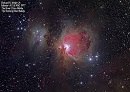

I had no Internet for a month. I was in a dark sky site, the stars were so bright. Using my binoculars, I was look for a very faint object in the sky. After searching for about half an hour, I managed to locate it. There was dim star close by, inside the same field of view. I looked at the star, it had just gotten dimmer and the faint object got brighter.. What the hell? I double checked, triple checked, to make sure this was happening.
So when looking at dim objects, you could see more detail by looking slightly to the left/right, top/under. I got more people to try this out. They agreed with me. While they were using the binoculars, I realised you could experience this phenomenon using just your naked eyes. After getting access to Internet, I posted my findings on an amateur astronomy forum I frequent.
To my disappointment, this had already been well documented
 . Looking back, I had no idea of what was the reason behind this, nor did I have any means of finding out. As it turns, averted vision (the technique used) works because there are no rods (cells which detect dim light in black and white) in the fovea: a small area in the center of the eye. The fovea contains only cone cells, which serve as bright light and color detectors and are not as useful during the night. Based on the early, but controversial, work of Osterberg (1935), the density of the rod cells usually reaches a maximum around 20 degrees off the center of vision. Fulton (2005) presents an alternate interpretation of Osterberg's analysis. That's my story
https://en.m.wikipedia.org/wiki/Averted_vision